What It Takes to Power a World-Class Event, And Why Your Building Needs the Same Standard
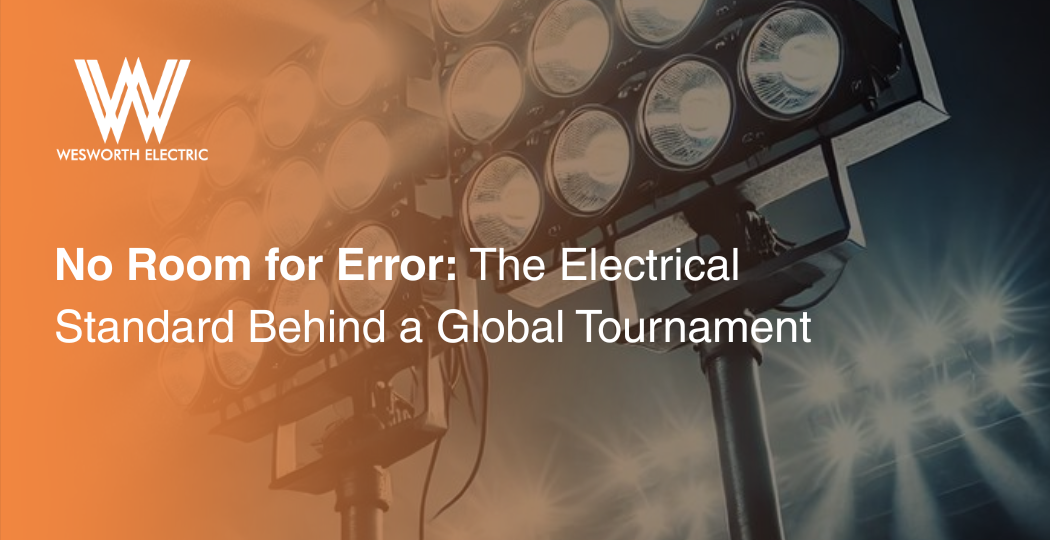
When Hard Rock Stadium hosts a match in front of a global audience, there is no acceptable margin for an electrical failure. No flickering lights, no tripped breaker, no dead zone in a concourse packed with people. Every circuit, panels, backup system has to perform exactly as designed, for the full length of the event, with millions watching.
That’s not a stadium-specific standard. It’s the standard every commercial building should be held to. Most just don’t get tested on a global stage.
- The Standard Behind the Scenes
Backup power that actually kicks in. Load distribution that’s been planned for peak demand, not average demand. Inspections done well before the event, not discovered mid-event. None of this is visible to a crowd focused on the game. It’s only visible when it fails.
- Your Building Faces the Same Test, Just Quieter
A retail property during a packed weekend. A hotel during a booked-out event weekend. A facility running critical equipment during business hours. The stakes are different in scale, but the standard is the same: the electrical system has to hold under real demand.
- South Florida's Summer Puts This to the Test Right Now
Between tournament-driven crowds, peak hotel occupancy, and summer’s own load on cooling systems, this is the exact window where marginal electrical infrastructure gets exposed. The buildings that hold up are the ones that treated reliability as a standard to build toward, not a box to check.
- Why This Matters for General Contractors and Property Teams
For general contractors, it means specifying and building to a standard that holds up under real occupancy. For property and facility managers, it means the systems are ready before the demand hits, not scrambling to respond after.
What we recommend
This is the season to find out where your building’s electrical infrastructure stands.